 ultimate-guide
How to Become a Licensed Home Inspector in 2026
Table of Contents
- Step 1: Meet the Basic Eligibility Requirements for a Licensed Home Inspector
- Step 2: Complete Pre-Licensing Coursework and Field Training
- Step 3: Pass the National Home Inspector Exam and State Examination
- Step 4: Obtain Professional Liability and Errors and Omissions Insurance
- Step 5: Submit Your Application and Pass a Background Check
- How Long Does It Take to Get a Home Inspector License?
- Home Inspector Exam Prep: How to Pass on Your First Attempt
- The Cost of Home Inspector Training and Startup Expenses
- Frequently Asked Questions
Last Updated: September 27, 2026
Step 1: Meet the Basic Eligibility Requirements for a Licensed Home Inspector
Before you enroll in any course, understand one structural fact that shapes everything else: there is no federal licensed home inspector credential. Regulation happens at the state level, and a handful of states have no statewide licensing requirement at all. That means the eligibility rules you follow depend entirely on where you intend to work, and the requirements can differ sharply across a state line.
Start by confirming which category your state falls into:
- Licensed states issue a credential through a state agency or commission and set minimum education, exam, insurance, and background-check rules.
- Unregulated states have no statewide license, so market forces and certification bodies fill the gap.
- Partially regulated states license inspectors in some contexts (for example, certain transaction types) but not others.
Most licensing states share a common baseline. You generally must be at least 18 years old, be legally authorized to work, hold a high school diploma or GED, and pass a criminal history check. Some states add a minimum number of completed inspections before you can operate independently, and a few require you to work under a licensed inspector first. Prior construction or trades experience is rarely mandatory, but it shortens the learning curve on structural, electrical, and HVAC systems.
Two eligibility traps catch career-changers:
- Reciprocity and portability. If you might move or work near a state border, check whether your target state recognizes another state's license or requires you to start over. Reciprocity is inconsistent, and some states grant it only to inspectors with a set number of years and inspections logged.
- Criminal history disclosure. A record does not automatically disqualify you, but failing to disclose it does. Most boards evaluate offenses individually and care most about crimes involving fraud or breach of trust.
State licensing requirements and regulator directory
If you are weighing a career change from construction, engineering, or a trade, your existing knowledge is an asset, but it does not substitute for the state's required coursework and exam. Confirm the baseline first, then choose a provider whose curriculum maps to your specific state's requirements.
Step 2: Complete Pre-Licensing Coursework and Field Training
Every state sets a minimum number of pre-licensing coursework hours, and Texas requires completion through an approved provider before you can sit for the state examination. The Texas Real Estate Commission (TREC) maintains the list of approved Qualifying Education Providers, and you can verify a provider's status through the TREC qualifying education provider search.
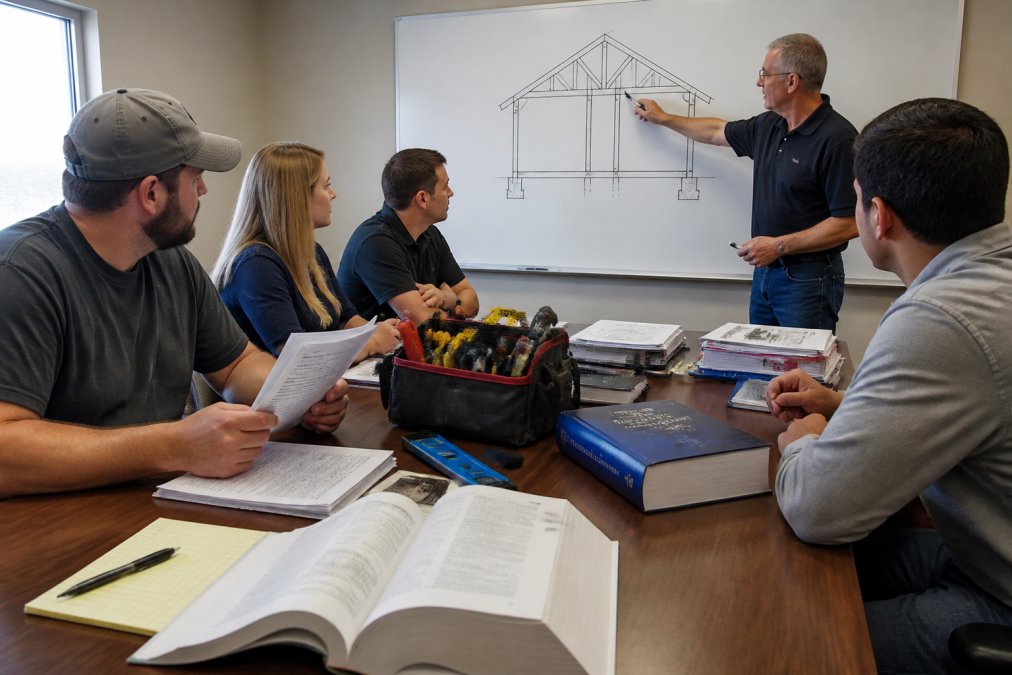
Your coursework covers the standard of practice, building codes, structural integrity, electrical systems, HVAC inspection, and plumbing standards. Field training, sometimes called an apprenticeship or mentorship, puts you alongside a working inspector so you see real properties, real defects, and real report writing.
The Inspection Academy builds its curriculum around adult learning theory, which matters if you're studying nights and weekends around a full-time job. Interactive modules beat passive video lectures when you're trying to retain code details.
Step 3: Pass the National Home Inspector Exam and State Examination
Two exams stand between you and your license: the National Home Inspector Exam (NHIE) and any state-specific examination your licensing board requires. The NHIE tests technical proficiency across all major home systems, while the state exam covers local regulations and TREC rules.
Passing on the first attempt saves you both money and momentum. The Inspection Academy reports an 80% first-time pass rate among its students, and its Bulletproof Test Prep app uses adaptive AI to target the areas where you're weakest rather than drilling what you already know.
Step 4: Obtain Professional Liability and Errors and Omissions Insurance
Most states require proof of professional liability insurance, often called errors and omissions insurance, before they'll issue your license. This coverage protects you if a client claims you missed a defect that later caused them financial loss.
Texas requires inspectors to carry a minimum level of E&O coverage, and the specific amount is set by TREC rule.
Step 5: Submit Your Application and Pass a Background Check
Once your coursework, exams, and insurance are in place, you submit your license application to the state regulatory commission along with your fees. The application requires fingerprinting and a background check, and you'll need to disclose any criminal history honestly.
How Long Does It Take to Get a Home Inspector License?
Most people complete the full process in three to six months, depending on how quickly they finish coursework and schedule exams. The timeline breaks down roughly like this:
| Phase | Typical Duration | What Slows People Down |
|---|---|---|
| Pre-licensing coursework | 4-8 weeks | Working full-time while studying |
| Field training | 2-4 weeks | Scheduling conflicts with a mentor |
| Exam prep and testing | 2-4 weeks | Waiting for test dates |
| Application and background check | 2-6 weeks | Incomplete paperwork |
Home Inspector Exam Prep: How to Pass on Your First Attempt
The single most effective exam prep strategy is active recall, not re-reading. Testing yourself on code details and inspection scenarios builds retention far better than highlighting a textbook.
The Cost of Home Inspector Training and Startup Expenses
Most guides stop at "it varies." That is useless when you are deciding whether to make the leap. Here is a realistic framework for budgeting, with the categories that actually move the total. Treat the ranges as planning estimates and confirm current figures with your provider, your state agency, and your insurance broker, because fees change.
One-time costs
- Pre-licensing coursework: This is usually the largest single line item. Self-paced online programs sit at the lower end; instructor-led or in-person programs with field training cost more. Expect a spread of roughly several hundred to a few thousand dollars depending on hours required and format.
- Exam fees: The national exam and any state exam are paid separately, and each has its own fee. Budget for at least one retake so a failed attempt does not stall you.
- Background check and fingerprinting: A modest but unavoidable fee, often paid to a vendor the state designates.
- Initial license application fee: Set by the state and typically paid at submission.
- Business formation: If you operate as an LLC or corporation, expect a state filing fee plus any registered-agent cost.
Recurring costs
- Professional liability and errors and omissions (E&O) insurance: Premiums are usually annual and scale with your coverage limits and claims history. This is required in most licensing states before a license is issued.
- General liability insurance: Often bundled or sold alongside E&O; covers property damage and injury claims.
- Continuing education: Most states require a set number of CE hours per renewal cycle, which carries a cost every year or two.
- License renewal fees: Recurring and easy to forget.
- Software and report-writing tools: Inspection report software is typically a monthly or annual subscription.
Equipment
Marketing and client acquisition
The first 90 days after licensure
Frequently Asked Questions
How much do home inspectors make per home?
Home inspectors typically charge a flat fee per inspection, which varies by region, home size, and scope. Your actual earnings depend on your local market, marketing efforts, and how efficiently you run your business. Your actual earnings depend on your local market, marketing efforts, and how efficiently you run your business.
How long will it take to become a home inspector?
In most states, the process takes two to six months from start to finish. This includes completing required pre-licensing coursework, passing the national and state exams, and submitting your license application. Some states also require field training or apprenticeship hours, which can add a few weeks. If you study full-time, you can finish faster; if you're working another job, expect closer to six months. The timeline also depends on how quickly your state licensing board processes applications.
Is being a home inspector worth it?
For many people, yes. Home inspection offers flexible scheduling, independence, and the potential for a solid income without a four-year degree. The Bureau of Labor Statistics projects steady demand as homes age and real estate transactions continue. However, success requires strong technical skills, attention to detail, and the ability to market your services. If you enjoy problem-solving and working with your hands, it can be a rewarding career. Start by researching your state's requirements and talking to local inspectors about their day-to-day work.
Is it hard to pass the home inspector exam?
The exams cover a broad range of topics, including structural systems, electrical, plumbing, HVAC, and report writing. Many candidates find it challenging without proper preparation. To improve your odds, enroll in a comprehensive exam prep course that includes practice questions and simulated exams. Focus on understanding the standards of practice and building codes, not just memorizing answers. With dedicated study, most people can pass.
What are the TREC requirements for home inspectors?
The Texas Real Estate Commission (TREC) requires aspiring inspectors to complete qualifying education, pass a national exam and a state-specific exam, undergo a background check, and obtain errors and omissions insurance. You must also submit an application and pay the required fees. TREC-approved providers offer the necessary coursework. After licensure, you must complete continuing education to renew. Always verify current requirements on the TREC website, as rules can change.