 ultimate-guide
Home Inspector Exam Pass Rates Explained (2026)
Table of Contents
- What the Home Inspector Exam Pass Rates Actually Measure
- NHIE Scoring and the Passing Threshold, Explained
- First-Time Pass Rates: National NHIE vs. State Licensing Exams
- TREC Exam Pass Rates by Provider: What the Numbers Show
- How to Prepare for the NHIE Without Guessing
- The Best Home Inspector Exam Prep App for Working Adults
- Why Candidates Fail: The Most Challenging Exam Domains
- Conclusion: Turning Pass Rate Data Into a Study Plan
- Frequently Asked Questions
Last Updated: September 28, 2026
What the Home Inspector Exam Pass Rates Actually Measure
Home inspector exam pass rates measure the percentage of candidates who pass a licensing exam on their first attempt, expressed against a scaled score threshold set by the exam's governing body. At The Inspection Academy, we track these numbers closely because they expose something most prep guides skip: a pass rate is a measure of exam difficulty, candidate preparation, and scoring mechanics combined. The National Home Inspector Examination (NHIE) and state-specific exams like the Texas Real Estate Commission (TREC) licensing exam each publish different data, and reading them side by side tells you far more than any single figure.
Here's the tension worth understanding. A low first-time pass rate doesn't mean the exam is unfair. It usually means candidates underestimated how the exam tests applied judgment rather than memorized facts.
InterNACHI's guide to the National Home Inspector Examination outlines the exam's structure, and the key detail is that it's a competency assessment, not a trivia test. That distinction shapes everything about how you should prepare.
NHIE Scoring and the Passing Threshold, Explained
The NHIE does not report a percentage. It reports a scaled score on a 200-800 range, and the passing threshold sits at a fixed scaled value rather than a raw count of correct answers. Understanding why that scale exists is the difference between studying smart and studying blind.
Here is the mechanism. The NHIE is a criterion-referenced exam, not a norm-referenced one. You are not being ranked against other candidates on the same day. You are being measured against a fixed competency standard that a panel of subject-matter experts defined through a formal standard-setting study. That panel reviews each item, estimates how a minimally competent inspector would perform, and the exam board converts those judgments into a cut score on the scaled range. The cut score stays constant across exam forms even when the questions change.
Raw scores vary by form because no two versions of the exam are identical in difficulty. Form A might have a slightly harder set of scenario items than Form B. If the board reported raw percentages, a candidate who took the harder form would be penalized for something outside their control. Scaling corrects for that. Two candidates can answer the same number of questions correctly and receive different scaled scores if their forms differed in difficulty, and that is the system working as designed, not a glitch.
What this means for you:
- There is no published "you need X correct out of Y" target, because that number changes with every form.
- A practice exam score of "72%" tells you almost nothing about your scaled score on test day.
- The only stable target is domain mastery measured against the published content outline.
NHIE candidate handbook and scoring overview publishes the official scale range and cut-score policy, and it is worth reading before you register.
First-Time Pass Rates: National NHIE vs. State Licensing Exams
First-time pass rates differ between the national NHIE and state licensing exams, and the gap is not random. It comes down to three structural variables: who is allowed to sit for the exam, how they prepared, and what the exam is designed to measure.
The NHIE is a national competency exam used by multiple states as a licensure requirement. Its candidate pool is broad. Some candidates arrive straight out of a structured qualifying education program. Others are experienced tradespeople, electricians, plumbers, general contractors, who assume their field knowledge transfers and study lightly. Others are career changers who self-directed their prep with a question bank and a few videos. That mix produces a wider spread of outcomes than a state exam with a tighter eligibility funnel.
State licensing exams, by contrast, often sit at the end of a required qualifying education program. In states that mandate pre-licensure coursework through an approved provider, every candidate arrives with a baseline of structured instruction. The preparation is built into the pathway rather than improvised around it. That structural difference alone can move first-time pass rates by a meaningful margin.
A comparison of the two exam pathways:
Factor | National NHIE | State Licensing Exam (e.g., TREC) |
|---|---|---|
Governing body | National exam board | State licensure board |
Eligibility | Varies by state; some allow direct registration | Completing qualifying education through an approved provider |
Candidate pool | Broad, experienced trades, career changers, recent students | Narrower, all candidates completed a required course |
Preparation model | Often self-directed | Usually tied to a provider curriculum |
Scoring | Scaled score (200-800) | Scaled score |
Retake policy | Set by state | Set by state board |
This is where the state-vs-national confusion does real damage. A candidate reads a national first-time pass rate, assumes the state exam will be easier because it is "local," and under-prepares. The opposite is often true: a state exam tied to a structured course tends to produce stronger first-time results precisely because the preparation is mandatory and sequenced, not because the questions are softer.
A common pattern practitioners see: candidates who treat the national exam as a formality and the state exam as the "real" test get the relationship backwards.
TREC Exam Pass Rates by Provider: What the Numbers Show
TREC exam pass rates by provider vary widely, and the variance is the most useful signal a prospective inspector can look at. Texas requires candidates to complete qualifying education through a TREC-approved provider before sitting for the licensing exam. Because every candidate passes through a provider, provider-level pass data reflects the quality of that preparation.
How to Prepare for the NHIE Without Guessing
Preparing for the NHIE without guessing means replacing vague "study everything" plans with a domain-weighted strategy built on the exam's published content outline. The exam covers defined domains, and each domain carries a different weight. Studying proportionally to those weights is the single highest-use change most candidates can make.
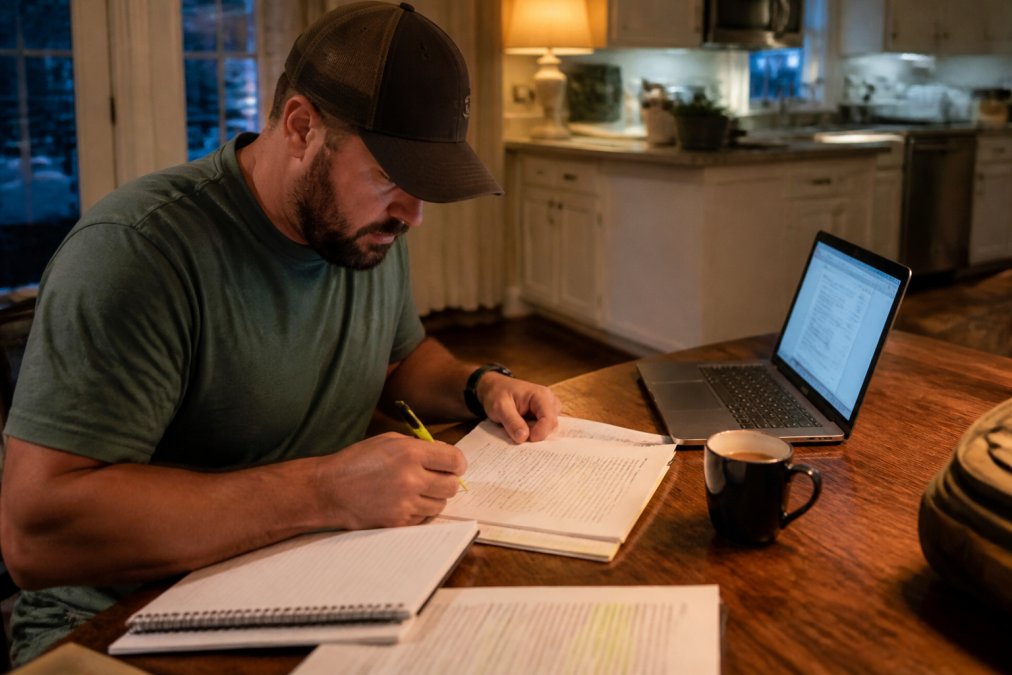
Here's a preparation sequence that works for working adults:
- Pull the official exam content outline and list every domain.
- Assign each domain a study block proportional to its exam weight.
- Take a diagnostic practice exam to find your weak domains.
- Build a review schedule that revisits weak domains weekly, not once.
- Simulate exam conditions with timed, full-length practice tests.
- Review every missed question and trace it back to the underlying concept.
- Register only once your practice scores are consistently above the passing threshold.
The Best Home Inspector Exam Prep App for Working Adults
The best home inspector exam prep app for working adults is one that adapts to your schedule and targets your weak domains automatically. The Inspection Academy's Bulletproof Test Prep app uses adaptive AI to identify gaps and serve review questions where you're weakest, which matters when you only have nights and weekends. Mastering these technical concepts early builds the foundation necessary for accurately interpreting inspection reports once you are out in the field.
Why Candidates Fail: The Most Challenging Exam Domains
Candidates rarely fail because one topic like building codes trips them up. They fail because the exam covers an enormous volume of material, and it is genuinely hard to know where the holes in your own bucket are. Studying without targeted guidance means pouring hours into what you already know while your real weak spots go untouched. For years, no school had a way to pinpoint those gaps for each student, because the technology simply did not exist yet. That is the exact problem The Inspection Academy and the Bulletproof Test Prep app were built to solve: adaptive AI that finds your weakest domains and drills them, so your study time goes where it actually moves your score.
Conclusion: Turning Pass Rate Data Into a Study Plan
Pass rate data is only useful if it changes what you do. The candidates who pass on the first attempt treat the numbers as a diagnostic: they identify the hardest domains, weight their study time accordingly, and verify progress with timed practice exams before registering. The Inspection Academy built its program around exactly this approach, combining TREC-approved qualifying education, the adaptive Bulletproof Test Prep app, and a 100% tuition-back guarantee into a path designed for working adults.
Frequently Asked Questions
Is it hard to pass the home inspector exam?
It depends on your preparation. The NHIE and state licensing exams like the TREC exam are multiple-choice and test real inspection methodology, building codes, and professional standards across defined exam domains. Candidates who complete structured, TREC-approved qualifying education and use adaptive practice tools tend to pass on the first try. Programs such as The Inspection Academy report an 83% first-time pass rate, which is higher than what many self-study candidates achieve.
What is the pass rate for the national home inspector exam?
Pass rates vary by candidate background, preparation method, and exam version. The NHIE is a scaled, psychometrically analyzed exam, so a passing threshold is set rather than a fixed percentage of correct answers. Candidates who complete formal education and practice with an adaptive app generally outperform those who rely on free online quizzes alone. For Texas candidates, The Inspection Academy reports an 83% first-time pass rate on the TREC licensing exam.
How do education providers influence home inspector exam pass rates?
Providers influence pass rates through curriculum design, practice volume, and feedback quality. TREC-approved qualifying education covers the required knowledge requirements, while adaptive review apps adjust question difficulty to target weak areas. Programs that use adult learning theory and interactive courses help working professionals retain material. The Inspection Academy combines TREC-approved courses with the Bulletproof Test Prep adaptive AI app and reports an 83% first-time pass rate.
How can I improve my chances of passing the home inspector exam on the first try?
Start with a TREC-approved qualifying education course, then use an adaptive prep app to drill weak domains daily. Take full-length practice exams under timed conditions to reduce test anxiety. Review missed questions immediately and track your scaled score trend. Working professionals often study 45-60 minutes on weeknights and 2-3 hours on weekends. The Inspection Academy's 100% tuition-back guarantee supports candidates who follow the program and still do not pass on the first attempt.